

This guide reviews Major Bag Categories by Lifestyle Wholesale for brands, sourcing teams, and collection planners. A useful trend decision connects silhouette, function, material, price position, target customer, and production feasibility instead of following visual novelty alone. Buyers should compare construction risk, carry comfort, component availability, care requirements, sample performance, and how consistently the design can be repeated in bulk. Treat forecasts and popularity claims as planning signals, then validate the final range against current customer data, approved materials, and commercial requirements.
Ever felt lost in a sea of bag terminology1? Satchel, hobo2, duffel3, messenger4... it's confusing. Using the wrong term with a manufacturer can derail your vision before it even starts.
Bags are defined by their function, shape, and carrying method. Major categories include travel bags5 for journeys, everyday bags6 for daily essentials, and fashion handbags7 classified by specific silhouettes like satchel8s or hobo2s. Material choice further defines their use case and durability.

When I first started designing, I thought a bag was just a bag. I quickly learned that communicating my vision required learning a whole new language. Knowing the difference between a tote9 and a satchel8 isn't just trivia; it's a crucial part of the manufacturing process. It ensures you and your production partner are speaking the same language. Let's start by breaking down the broadest categories.
What Are the Key Functional Differences Between Travel Bags (Duffels, Backpacks) and Everyday Bags (Totes, Messengers)?
Is a backpack for a week-long trip or just your daily commute? The lines often seem blurry. Choosing the wrong type means you're either carrying too much bag or not enough stuff.
Travel bags, like duffel3s and large backpacks, prioritize capacity and ruggedness for long journeys. Everyday bags, such as tote9s and messenger4s, focus on accessibility, organization, and comfort for daily items like laptops and wallets, designed for frequent, short-term use.

I once tried to use a stylish messenger4 bag for a weekend trip. It was a disaster. It looked great, but it simply couldn't hold everything I needed, and the single strap became uncomfortable after a few hours. This taught me a valuable lesson: a bag's design is driven by its intended purpose. The needs of a world traveler are completely different from the needs of a daily commuter, and the bags they carry reflect that.
Design Philosophy: Capacity vs. Accessibility
The core difference comes down to one question: what problem is the bag solving? Travel bags are designed to move a large volume of belongings from one point to another. Everyday bags are designed for easy access to a few key items throughout the day.
| Feature | Travel Bags (Duffels, Travel Backpacks) | Everyday Bags (Totes, Messengers) |
|---|---|---|
| Primary Goal | Maximize Capacity | Accessibility & Organization |
| Typical Size | Large (40L+) | Small to Medium (15-30L) |
| Key Features | Padded harness, large open space, compression straps | Laptop sleeve, internal pockets, quick-access closure |
| Common Materials | Ballistic Nylon, Heavy Canvas, Ripstop | Leather, PU, Cotton Canvas, Fashion Nylon |
| Use Case | Weekend trips, flights, expeditions | Daily commute, shopping, work |
Travel bags like duffel3s offer a giant, simple space, perfect for packing cubes and bulky items. Large travel backpacks add sophisticated harness systems for carrying heavy loads comfortably. In contrast, an everyday tote9 provides a large, open top for quickly dropping in groceries or a sweater. A messenger4 bag keeps your laptop and documents secure against your body and easy to grab on a crowded train. The design choices always follow the function.
What Specific Terminology and Styles Are Used to Classify Handbags Based on Shape and Carrying Method (e.g., Satchel vs. Hobo)?
You have a perfect handbag shape in your mind, but you have no idea what it's called. This communication gap can be frustrating when you're trying to describe your design.
Handbags are classified by their silhouette and how they are carried. A satchel8 is a structured bag with a top handle and a strap. A hobo2 is a soft, crescent-shaped bag. A clutch10 is a small, strapless bag. Knowing these terms is key.
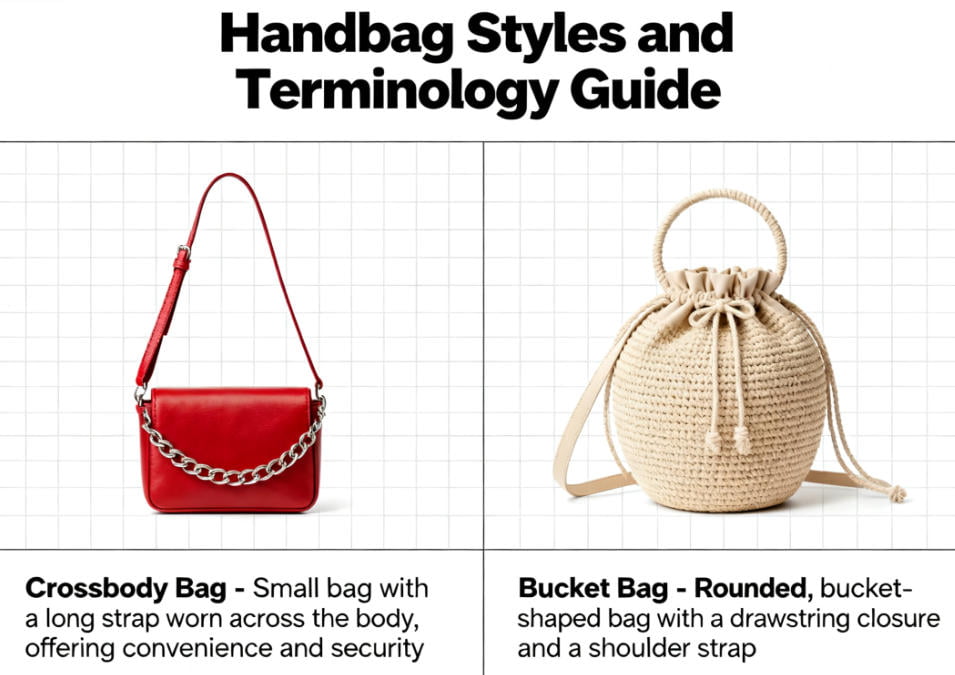
In the world of fashion, shape is everything. I remember sketching a design and calling it a "soft briefcase." My manufacturing partner gently corrected me, "Ah, you mean a satchel8." That small clarification changed everything. It gave us a shared reference point and made the entire sampling process smoother. Using the right terminology ensures your creative vision is understood perfectly. It's the first step in turning your idea into a tangible product.
Your Visual Handbag Dictionary
Let's break down some of the most common handbag styles. The differences are often subtle but important for design and function. Understanding these categories is the foundation of good handbag design.
| Handbag Style | Key Characteristics |
|---|---|
| Satchel | Structured body with a flat bottom, a top handle, and a long shoulder strap. Think of it as a sophisticated, feminine version of a briefcase. |
| Tote | A large, unfastened bag with two parallel handles. Simple, practical, and designed to carry a lot. Often made of sturdy materials like canvas11 or leather12. |
| Hobo Bag | A large, crescent-shaped bag made of soft, flexible material that slumps when set down. It has a relaxed, bohemian feel. |
| Crossbody Bag | Defined by its long strap that is worn across the body. They are typically smaller and designed for hands-free convenience. A messenger4 bag is a type of crossbody. |
| Clutch | A small, strapless handbag designed to be "clutch10ed" in the hand. It's typically used for evenings and carries only the essentials. |
| Bucket Bag | A cylindrical bag with a rounded bottom, a drawstring closure at the top, and a long shoulder strap. It offers a surprising amount of space. |
These are just a few of the core styles. As a manufacturer, we've produced over 50 different categories, each with its own unique construction and appeal.
How Does Bag Material (e.g., Canvas, Leather, Nylon) Impact a Bag's Durability and Recommended Use Case?
You've picked a style, but now you need to choose the material. This choice seems purely aesthetic, but the wrong material can lead to a bag that falls apart or looks worn out fast.
The material directly determines a bag's durability, weight, weather resistance, and price point. Leather is durable and classic, nylon13 is lightweight and strong, and canvas11 is casual and rugged. Each is suited for different lifestyles and functions.

Choosing a material is one of my favorite parts of the design process. It's where the character of the bag really comes to life. But it's a technical decision, too. I once designed a beautiful commuter bag using a soft, untreated suede. It looked amazing, but the first time a client got caught in the rain, the bag was ruined. I learned that you must match the material to the real-world use case. A great partner can guide you on this, suggesting materials you may not have even considered.
Matching Material to Mission
Think of materials as having their own unique personalities and skill sets. Your job as a designer is to cast the right one for the role your bag will play. As manufacturers, we work with over 100 different materials, but they generally fall into a few key families.
-
Leather (and its alternatives):
-
Full-Grain Leather: The most durable and highest quality. It develops a beautiful patina over time. It's heavy and expensive, best for high-end, long-lasting products like briefcases and luxury handbags.
-
PU/Vegan Leather: A synthetic alternative that offers a consistent look at a lower cost. It's less breathable and durable than real leather12 but offers great versatility in color and texture.
-
Woven Fabrics:
-
Canvas: A heavy-duty plain-woven fabric, traditionally from cotton. It's strong, durable, and has a casual feel. Perfect for tote9s and casual backpacks. It can be waxed for water resistance.
-
Nylon: A synthetic fabric known for being lightweight, strong, and resistant to abrasion and water. Ballistic nylon13 is extremely tough and used for luggage. Lighter nylon13s are great for packable bags and casual styles.
-
Other Materials:
-
Neoprene: The same material used for wetsuits. It's soft, padded, water-resistant, and has a modern, sporty look. Great for laptop sleeves and unique bag designs.
Conclusion
Understanding bag categories14, styles, and materials is essential for any brand. This knowledge empowers you to create a better product and communicate your vision clearly to your manufacturing partner.
Familiarize yourself with essential bag terminologies to enhance your communication with manufacturers. ↩
Discover the unique characteristics of hobo bags and how they can add a relaxed vibe to your wardrobe. ↩
Find out which duffel bags are highly rated for their capacity and durability, perfect for your next trip. ↩
Explore the benefits of messenger bags and why they are ideal for commuters and students alike. ↩
Explore this link to discover top-rated travel bags that maximize capacity and comfort for your adventures. ↩
Check out this resource for recommendations on everyday bags that combine style and functionality for your daily essentials. ↩
Stay updated on the latest trends in fashion handbags to inspire your next design or purchase. ↩
Learn about satchel bags, their features, and why they are a stylish choice for both work and casual outings. ↩
Check this link for the best tote bags that combine practicality and style for your shopping needs. ↩
Discover the versatility of clutch bags and when to use them for a chic evening look. ↩
Find out why canvas is a popular choice for bags and its benefits in terms of durability and style. ↩
Learn about different types of leather and how they impact the quality and longevity of bags. ↩
Discover the advantages of nylon bags, including their lightweight and water-resistant properties. ↩
Explore the different categories of bags to better understand their functions and styles. ↩
