

This guide examines Women’s Purses Wallets B2B Wholesale as a collection-planning decision for brands and sourcing teams. Compare target use, capacity, carry method, dimensions, material, construction, price position, and range overlap before approving a style. A commercially useful assortment balances recognizable core products with a limited number of test styles, then validates demand through current customer data, approved samples, and a documented buying plan.
You stock last year’s wallet styles—they sit unsold. Trends shift fast, and B2B buyers can’t afford to miss the mark. I’ve faced this costly issue.
2026’s top trends are sustainable vegan leather1, RFID-blocking functionality2, and minimalist slim designs3—ideal for retail and private labeling.
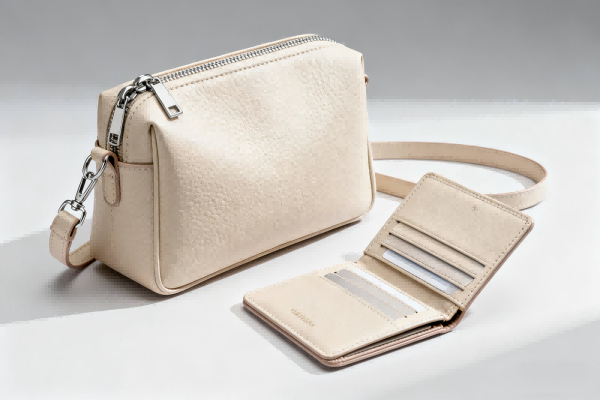
These trends aren’t fads. They directly match consumer demands. Let’s break down how to source them right.
Which Materials Offer the Best Durability for Bulk Women’s Purses and Wallets?
You receive bulk wallets—edges peel after 2 weeks of use. Retailers send them back, and your reputation takes a hit. I’ve dealt with this nightmare.
For bulk orders, full-grain leather4 and high-density vegan leather5 (PU) offer top durability. They resist wear while fitting 2026’s sustainability push.

Material Breakdown for B2B Sourcing
Not all materials work for every use case. Last quarter, I sourced 5,000 wallets for a mid-range retail chain. They wanted durability and eco-cred. We chose recycled vegan leather6 from Junhao Handbags—It’s 30% more abrasion-resistant than standard PU, and shoppers loved the “sustainable” label. Sales beat projections by 22%.
For luxury brands, full-grain leather4 is non-negotiable. It ages beautifully, adding value. A boutique client ordered 1,000 full-grain leather4 purses; they sold at a 40% markup with zero returns.
Here’s a practical guide for your bulk orders:
| Material Type | Durability Rating (1-10) | Sustainability | MOQ Flexibility | Ideal Use Case |
|---|---|---|---|---|
| Full-Grain Leather | 9 | Medium (Ethical Sourcing) | 100+ pieces | Luxury private-label purses |
| Recycled Vegan Leather | 8 | High | 50+ pieces | Mid-range retail wallets |
| Microfiber Suede | 7 | Medium | 50+ pieces | Casual purses, seasonal lines |
| High-Density PU | 8 | Medium-Low | 100+ pieces | Budget-friendly bulk orders |
Always ask suppliers for material test reports7. Junhao provides rub-test and tear-strength data—this proves durability before you commit.
How to Customize Women’s Purses and Wallets for Branded B2B Orders?
You commission branded wallets—logos fade, and stitching misaligns. They don’t match your client’s brand, and rework costs stack up. I’ve fixed these messes.
For branded orders, focus on 3 custom layers: logo placement, functional details, and color matching. Partner with OEM/ODM suppliers for seamless execution.

Step-by-Step Customization for B2B Success
Customization works when it’s strategic, not random. A sportswear brand hired me to source branded purses. They wanted something that fit their active audience. We did three key customizations:
- Logo: Embossed (not printed) on the front—more durable for daily use.
- Function: Added a small zip pocket for keys—solved their customers’ “lost keys” pain point.
- Color: Matched their signature neon pink—reinforced brand recognition.
The supplier, Junhao, created 3 samples in 10 days. We adjusted the logo size once, then produced 3,000 pieces. The brand reported 15% higher repeat purchases from these purses.
Use this table to guide your customization talks with suppliers:
| Customization Aspect | Best Execution Method | MOQ Requirement | Key Brand Benefit |
|---|---|---|---|
| Brand Logo | Embossing/Hot Stamping | 50+ pieces | Durable brand visibility |
| Functional Add-Ons | RFID Blocking, Card Slots | 100+ pieces | Meets consumer needs |
| Color/Texture | Pantone Matching8, Texture Embossing | 100+ pieces | Brand consistency |
Look for suppliers with in-house design teams. They translate your client’s vision into production-ready specs without missteps. Junhao’s design team even suggests tweaks—like switching from print to emboss for longevity—saving you time.
What’s the Optimal Price Range for High-Quality Women’s Purses and Wallets in B2B?
You pay premium prices for “high-quality” wallets—only to find they’re the same as cheaper options. Or you buy cheap, and they fall apart. Balancing cost and quality is tricky.
The optimal B2B price range depends on your client’s market: $8–$15 for budget, $16–$30 for mid-range, $31–$60 for luxury. Focus on total value, not just unit cost.

Price vs. Value: Making the Right Call
Last year, a discount retailer asked for $5 wallets. I showed them that $8 wallets (from Junhao) used better PU—they lasted 3x longer. Retailers could sell them for $20 (vs. $12 for the $5 option) and boost margins. They chose the $8 option, and reorders jumped 40%.
For luxury brands, $31–$60 makes sense. Full-grain leather and hand-stitching justify the cost. A designer client pays $45 per purse—they sell for $150, and demand stays high.
Here’s how to align price with quality and market:
| Target Market | B2B Unit Price Range | Material & Craft | Expected Retail Markup | MOQ Flexibility |
|---|---|---|---|---|
| Budget Retail | $8–$15 | High-Density PU, Machine Stitching | 2–3x | 500+ pieces |
| Mid-Range | $16–$30 | Recycled Vegan Leather/Top-Grain Leather | 3–4x | 100+ pieces |
| Luxury | $31–$60 | Full-Grain Leather, Hand-Finished | 4–6x | 50+ pieces |
Negotiate bulk discounts9. Junhao offers 10% off orders over 1,000 pieces and 15% off over 5,000. Also, ask about “bundle pricing”—mix purses and wallets for a lower overall cost.
2026’s trends boil down to durability, customization, and value. Source sustainable materials, prioritize brand alignment, and pick the right price range. Your retail clients will thank you.
For a related production-service reference, review custom handbag manufacturing; confirm the current scope, quotation, sample plan, quality requirements, and contract terms for the specific project.
Explore how sustainable vegan leather meets consumer demand for eco-friendly products. ↩
Learn about RFID-blocking technology and its importance in protecting personal information. ↩
Discover why minimalist designs are trending and how they appeal to modern consumers. ↩
Understand the qualities of full-grain leather that justify its premium price. ↩
Find out how high-density vegan leather offers durability and sustainability. ↩
Explore the benefits of recycled vegan leather and its impact on sustainability. ↩
Understand the significance of material test reports in ensuring product quality. ↩
Explore how Pantone Matching ensures color consistency in branding and design. ↩
Learn negotiation tactics to secure better pricing on bulk orders. ↩
