

Names such as tote, hobo, shoulder bag, and purse are useful, but they rarely tell the whole product story. Two bags in the same category can behave very differently once handle length, body structure, gusset depth, closure, material, and hardware are changed.
This visual guide presents 62 handbag and purse styles from a product-development perspective. It combines major silhouettes with commercially important variations that buyers regularly use when planning a collection. Every style is illustrated with a real product example from Junhao’s existing catalog, rather than an unrelated stock photo.
The images show representative constructions, not rigid universal standards. In the handbag industry, names often overlap between markets. A precise brief should always include photographs, dimensions, materials, carrying method, and functional requirements.
For current production references, browse the Junhao leather goods catalog. For original development, see our custom handbag manufacturing service.
At a Glance: How These 62 Styles Are Organized
- 1-14: tote bags and high-capacity variations
- 15-26: shoulder bags, underarm bags, and hobo shapes
- 27-37: crossbody and bucket constructions
- 38-44: structured, top-handle, and coordinated bag formats
- 45-54: mini purses, pouches, clutches, and cosmetic cases
- 55-62: wallets, card holders, and small leather goods
Tote Bags and High-Capacity Variations
1. Classic Tote Bag

A classic tote has two parallel handles and a generous main compartment. Development focus: handle reinforcement, base support, opening security, and internal organization should match the expected daily load.
2. Shopper Tote

A shopper is a simplified, spacious tote intended for quick access and practical capacity. Development focus: keep the body light enough for comfortable use while reinforcing the handle anchors and bottom corners.
3. Structured Tote

A structured tote keeps a clean, architectural shape when empty. Development focus: reinforcement board, leather temper, edge paint, base construction, and handle balance must be tested as one system.
4. Soft Tote

A soft tote relies on material drape rather than rigid reinforcement. Development focus: choose leather with consistent temper and confirm that the bag slouches attractively without losing its usable opening.
5. Shoulder Tote

A shoulder tote extends the handle drop so the bag sits comfortably beneath the arm. Development focus: check strap drop with outerwear, body depth, opening access, and how the bag hangs when loaded.
6. Long-Strap Tote

This variation uses extended straps to create a relaxed carry position and easy arm clearance. Development focus: longer straps increase leverage on the anchors, so reinforcement and stitch length require careful review.
7. Woven Tote

A woven tote builds texture through interlaced strips or panels. Development focus: strip width, edge treatment, backing, panel stretch, and material yield all affect appearance, durability, and cost.
8. Chain-Handle Tote

A chain-handle tote uses metal links as a functional or decorative carrying feature. Development focus: chain weight, plating quality, leather shoulder guards, attachment strength, and noise in use should be evaluated.
9. Belted Tote

A belted tote uses a strap, tab, or wrap detail to control the opening and change the bag’s profile. Development focus: the belt should be intuitive, secure, and easy to operate without distorting the body.
10. Trapezoid Tote

A trapezoid tote uses angled side seams to create a geometric outline. Development focus: symmetry, side-panel stiffness, base width, and handle position determine whether the shape looks balanced.
11. Suede Tote

A suede tote combines a familiar silhouette with a soft, directional nap. Development focus: color consistency, nap direction, rub resistance, dust protection, and packaging need more control than smooth leather.
12. Mixed-Material Tote

A mixed-material tote uses contrast in texture, color, or performance to define the design. Development focus: test color transfer, thickness transitions, seam compatibility, and cleaning requirements between materials.
13. Triangular Tote

A triangular tote changes the expected rectangular proportion through angled sides or handles. Development focus: confirm that the visual shape still provides adequate opening width, capacity, and comfortable handle clearance.
14. Tote-and-Pouch Set

A tote-and-pouch set adds organization and creates a higher-value coordinated offer. Development focus: align leather color, hardware finish, logo treatment, attachment method, and packaging across both pieces.
Shoulder, Underarm, and Hobo Styles
15. Classic Shoulder Bag

A shoulder bag is defined by a strap length that positions the body beneath the arm. Development focus: strap drop, opening clearance, bag balance, and the location of hardware affect everyday comfort.
16. Underarm Bag

An underarm bag uses a short strap and shallow body for a close, fashion-led fit. Development focus: test the strap drop with clothing, zipper access, and comfort where the bag contacts the wearer.
17. Baguette Bag

A baguette bag is compact, horizontal, and usually carried close beneath the arm. Development focus: body length, shallow depth, strap drop, and closure position create the recognizable proportion.
18. Chain-Strap Shoulder Bag

A chain-strap bag brings jewelry-like hardware to a compact shoulder silhouette. Development focus: consider chain weight, link smoothness, plating wear, strap threading, and shoulder comfort.
19. Quilted Shoulder Bag

A quilted shoulder bag uses stitched padding to create structure and texture. Development focus: quilting repeat, foam thickness, panel alignment, stitch tension, and edge turn affect the finished quality.
20. Patent Shoulder Bag

A patent shoulder bag uses a high-gloss surface for visual impact. Development focus: inspect the material for blocking, fingerprints, surface scratches, cracking at folds, and color transfer during storage.
21. Flap Shoulder Bag

A flap shoulder bag covers the main opening with an extended front panel. Development focus: flap alignment, magnetic-snap position, corner symmetry, and easy one-handed access should be checked on the sample.
22. Hobo Bag

A hobo bag has a soft body and a curved upper line that creates a natural slouch. Development focus: select material temper and lining support that preserve the drape without making the bag shapeless.
23. Large Hobo Satchel

This hybrid combines hobo softness with the scale and organization of a satchel. Development focus: control empty weight, opening size, pocket layout, handle comfort, and base stability.
24. Adjustable Hobo Bag
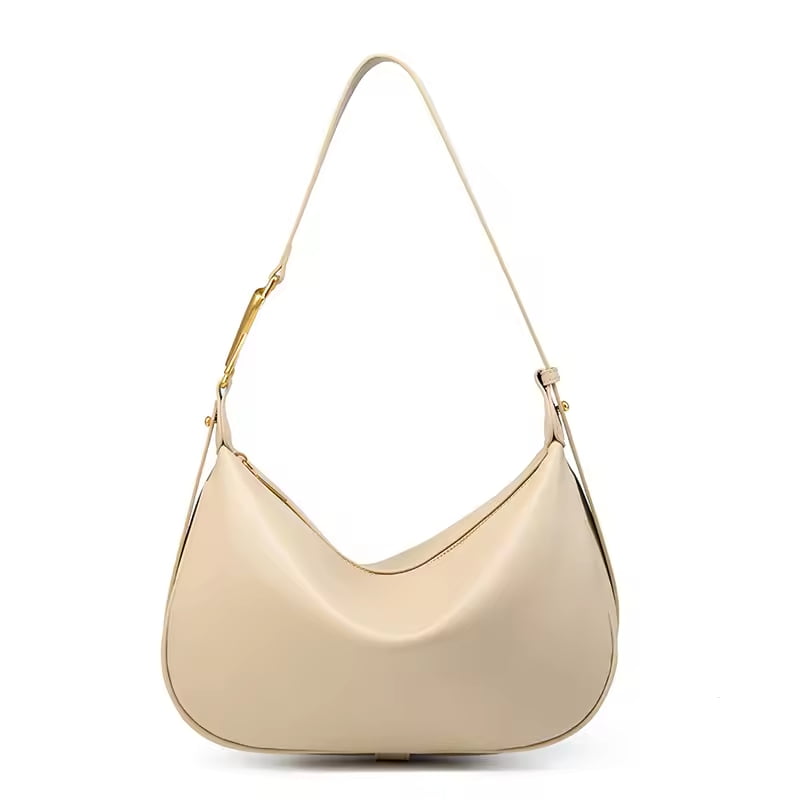
An adjustable hobo lets the customer change the shoulder drop or carrying position. Development focus: buckle range, strap tail control, edge comfort, and anchor reinforcement should work across every setting.
25. Woven-Handle Hobo

A woven handle turns a familiar hobo into a more artisanal statement piece. Development focus: handle flexibility, strip consistency, attachment strength, grip comfort, and long-term stretching require testing.
26. Dual-Strap Slouch Bag

A slouch bag emphasizes softness and a casual collapsed shape. Development focus: the two straps should share the load evenly, and the body should fold naturally without stressing the lining or zipper.
Crossbody and Bucket Constructions
27. Classic Crossbody Bag

A crossbody uses a long strap that passes diagonally across the torso. Development focus: strap adjustment range, body weight, opening access, and attachment strength determine daily comfort.
28. Structured Crossbody Bag

A structured crossbody maintains its shape and presents a more polished appearance. Development focus: reinforcement, corner turning, zipper path, edge paint, and strap balance need accurate pattern development.
29. Mini Crossbody Bag

A mini crossbody reduces capacity in favor of portability and a small visual scale. Development focus: verify phone fit, opening width, card storage, strap proportion, and usable internal depth.
30. Barrel Crossbody Bag

A barrel bag uses a cylindrical or rounded rectangular body. Development focus: curved end panels, piping, zipper length, seam matching, and body reinforcement control the final geometry.
31. Box Crossbody Bag

A box crossbody has firm walls and a compact geometric form. Development focus: board thickness, wrapped edges, hinge or zipper construction, and corner durability should be resolved before production.
32. Convertible Crossbody Bag

A convertible crossbody changes carrying mode through detachable or repositioned straps. Development focus: every configuration should feel balanced, and extra rings or clips should not look accidental when unused.
33. Classic Bucket Bag

A bucket bag combines a rounded base with a taller body and relaxed opening. Development focus: base stiffness, opening diameter, lining fit, and body collapse should be tested together.
34. Drawstring Bucket Bag

A drawstring bucket closes by gathering the upper body around a cord or strap. Development focus: eyelet reinforcement, draw resistance, cord ends, opening access, and surface abrasion need repeated-use testing.
35. Quilted Bucket Bag

This style combines a rounded bucket silhouette with padded quilting. Development focus: align the quilting around curved seams and control bulk where the padded body meets the base and opening.
36. Top-Handle Bucket Bag
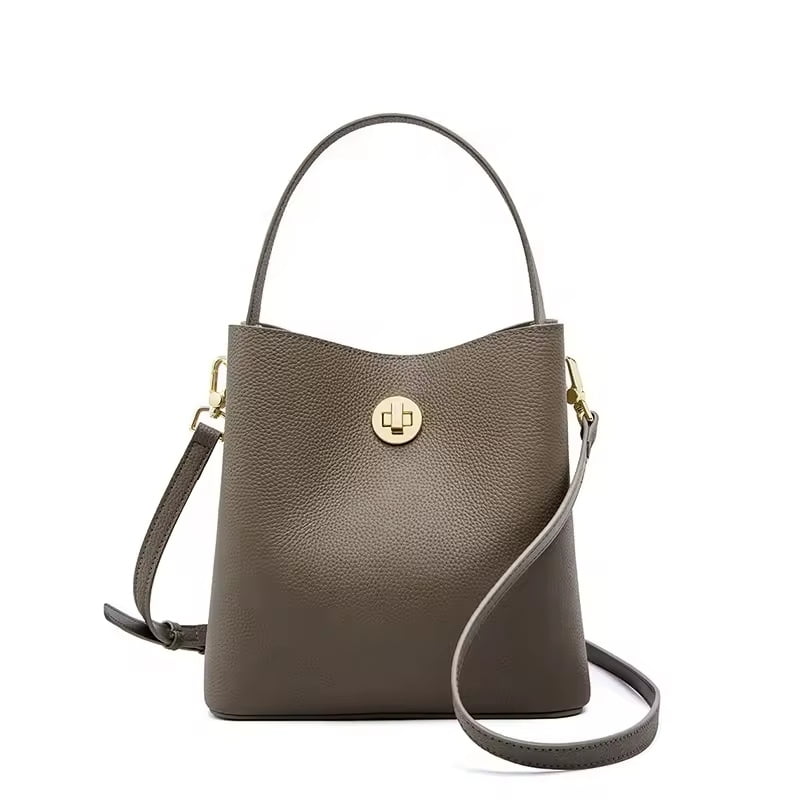
A top-handle bucket adds a more polished hand-carry option to the relaxed body. Development focus: reinforce the top-handle anchors without preventing the opening from gathering or flexing.
37. Suede Bucket Bag

A suede bucket emphasizes softness and natural drape. Development focus: manage nap direction, color variation, abrasion, drawstring friction, and protective packaging.
Structured, Top-Handle, and Coordinated Formats
38. Bowler Bag

A bowler bag has a wide base and curved upper body inspired by sporting cases. Development focus: piping, zipper curve, handle placement, and base reinforcement create the characteristic shape.
39. Top-Handle Satchel

A top-handle satchel combines a formal hand-carry silhouette with optional hands-free use. Development focus: handle balance, opening width, base stability, and long-strap attachment points are critical.
40. Front-Pocket Handbag

An exterior-pocket handbag places frequently used items on the front or side. Development focus: pocket capacity, closure security, seam bulk, pattern alignment, and the effect on the main compartment should be reviewed.
41. Woven Top-Handle Bag

This style combines hand-carry structure with a woven surface and optional long strap. Development focus: control panel stretch, handle reinforcement, edge finishing, and alignment where woven panels meet solid trim.
42. Quilted Mini Handbag

A quilted mini handbag combines small proportions with a padded decorative surface. Development focus: at this scale, quilting alignment, flap symmetry, hardware proportion, and usable phone capacity become especially visible.
43. Saddle-Inspired Flap Bag
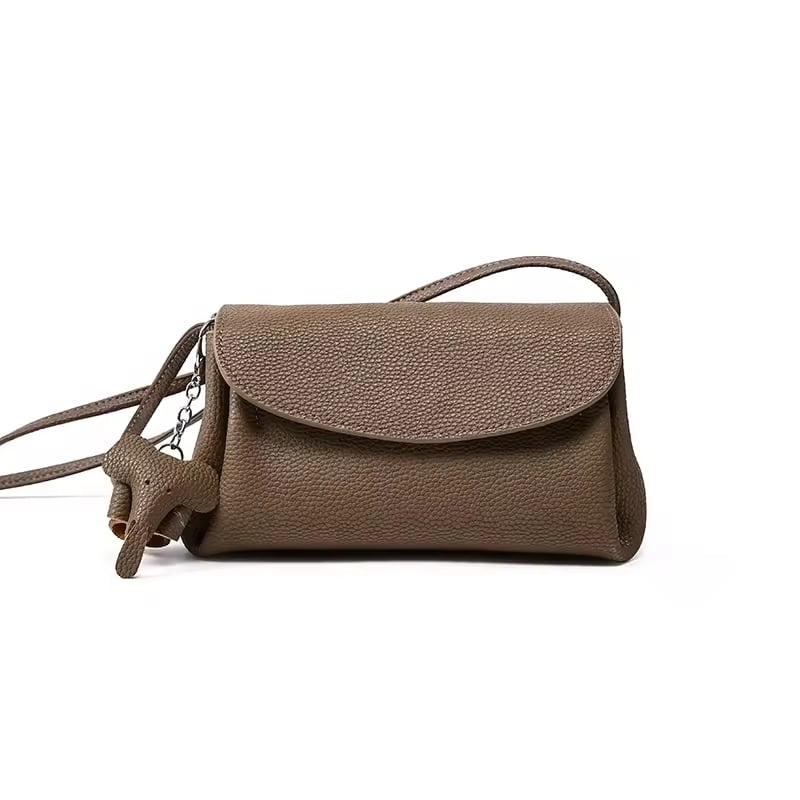
A saddle-inspired bag uses a curved lower edge and prominent front flap. Development focus: curved edge paint, flap alignment, gusset shape, and closure position require precise patterns.
44. Three-in-One Bag Set

A multi-piece set can cover several use cases and price perceptions in one offer. Development focus: coordinate materials, color tolerances, hardware, logos, packaging, and the way smaller pieces fit inside the main bag.
Mini Purses, Clutches, Pouches, and Cosmetic Cases
45. Kiss-Lock Mini Purse

A kiss-lock mini purse uses a rigid frame with two knobs that snap together. Development focus: the frame controls the upper pattern, and the material must be fixed into the channel evenly without puckering.
46. Clutch Wallet

A clutch wallet combines organized card and money storage with a hand-carried format. Development focus: internal thickness, gusset expansion, card-slot tolerance, closure security, and hand feel should be balanced.
47. Wristlet Wallet

A wristlet adds a loop strap to a wallet or pouch. Development focus: reinforce the strap anchor and check loop size, edge comfort, zipper access, and the loaded weight carried at one point.
48. Monogram Wristlet

A monogram wristlet uses print, embossing, or repeat pattern as a key brand cue. Development focus: align motifs across panels, control logo scale, and test surface wear at corners and folds.
49. Envelope Pouch

An envelope pouch uses a flat body and pointed or angled flap. Development focus: material thickness, flap symmetry, snap placement, edge paint, and corner sharpness determine the clean appearance.
50. Double-Zip Cosmetic Pouch

A double-zip pouch separates contents without a complex internal structure. Development focus: zipper spacing, compartment depth, washable lining, puller clearance, and seam bulk should be checked.
51. Structured Cosmetic Case

A structured cosmetic case protects contents and keeps a defined form. Development focus: zipper travel, lining cleanability, reinforcement, corner construction, and resistance to spills matter.
52. Vanity Case

A vanity case is inspired by cosmetic storage and usually opens widely for visibility. Development focus: top-handle balance, divider layout, washable lining, zipper path, and shell protection should be considered.
53. Zippered Clutch Wallet

A zippered clutch wallet adds secure closure and external quick-access storage. Development focus: zipper smoothness, front-pocket capacity, internal accordion alignment, and edge finishing affect perceived quality.
54. Coin-Pocket Wallet

A coin-pocket wallet balances slimness with storage for small change. Development focus: snap or zipper clearance, pocket expansion, folded thickness, and card-slot retention require accurate tolerances.
Wallets, Card Holders, and Small Leather Goods
55. Zip-Around Wallet

A zip-around wallet opens on three sides to reveal organized compartments. Development focus: zipper radius, accordion folds, card-slot spacing, coin pocket thickness, and fully loaded closure need testing.
56. Long Zip Wallet
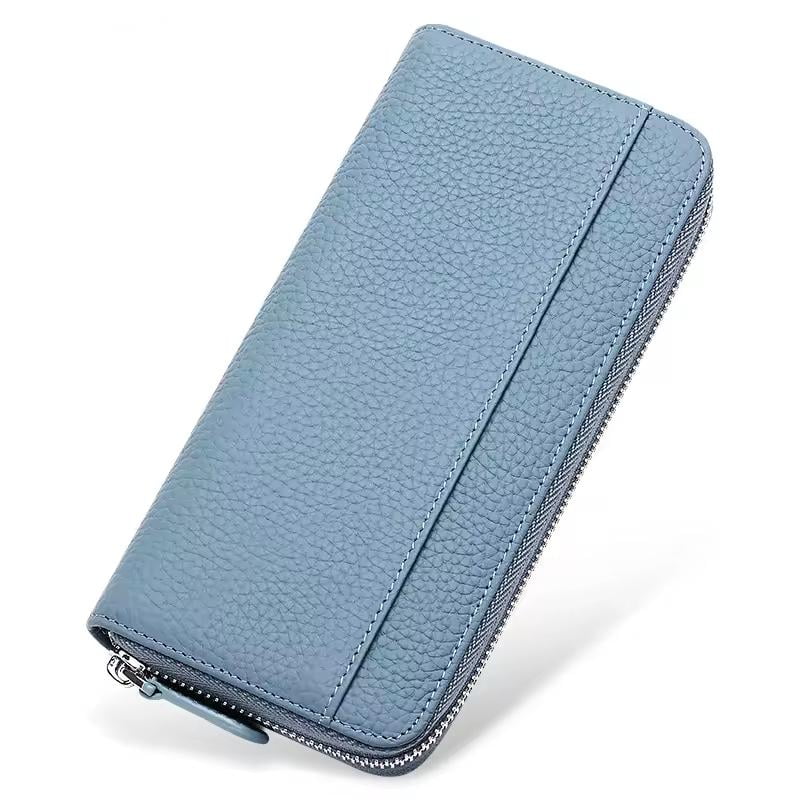
A long wallet provides horizontal storage for banknotes, cards, and documents. Development focus: control overall thickness, zipper straightness, internal divider height, and the balance between capacity and hand comfort.
57. Classic Long Wallet

A classic long wallet emphasizes a clean exterior and orderly internal layout. Development focus: panel flatness, fold allowance, slot tolerance, lining adhesion, and edge paint consistency are key.
58. Patent Wallet

A patent wallet uses a glossy surface to create a dressier appearance. Development focus: test blocking, fold cracking, surface marking, color transfer, and protective tissue or film for storage.
59. Kiss-Lock Wallet

A kiss-lock wallet adds a framed coin section to a larger wallet body. Development focus: align the metal frame, zipper, folds, and interior compartments so the wallet closes without excess bulk.
60. Card Wallet

A card wallet sits between a card holder and a traditional wallet. Development focus: slot width, leather thinning, layer buildup, stitch distance, and card retention need precise control.
61. Bifold Wallet

A bifold wallet folds once to create a compact everyday format. Development focus: allow for loaded thickness, keep the spine flexible, and maintain card-slot alignment across the fold.
62. Ostrich Leather Zip Wallet

An exotic-texture wallet uses the material itself as the central design feature. Development focus: confirm material legality and traceability for the destination market, then plan panel placement, grading, color consistency, and waste allowance.
How to Turn a Style Reference Into a Production Brief
A style name is only the starting point. Before requesting a sample or quotation, define the product in measurable terms:
- finished width, height, depth, handle drop, and strap range;
- intended use, target customer, and realistic contents;
- outer material, lining, reinforcement, edge finish, and color standard;
- closure, hardware shape, plating color, and functional load;
- pocket layout, device dimensions, and opening requirements;
- logo method, placement, packaging, and labeling;
- target quantity, price position, testing needs, and destination market.
When a full tech pack is not ready, a product image can communicate the initial direction. The next step is to identify what should remain, what should change, and what will make the new product original to your brand.
How to Build a Balanced Handbag Collection
Choose Roles Before Choosing Shapes
A practical range might include one high-capacity tote, one hands-free crossbody, one soft fashion shape, one compact occasion item, and one small leather good. This creates more useful variety than selecting several bags with different names but nearly identical functions.
Use Variations Deliberately
Material, strap, closure, and surface variations can extend a successful silhouette without developing a completely new pattern. A core tote, for example, can support structured, suede, woven, belted, or chain-handle versions when those choices match the target customer.
Approve Function, Not Just Appearance
Load the sample, wear it, open it repeatedly, inspect the lining, and check it on a flat surface. A beautiful photograph cannot reveal an uncomfortable strap, restricted opening, unstable base, or card slot that is too tight.
Frequently Asked Questions
Are all 62 entries completely separate handbag categories?
No. The guide intentionally combines major silhouettes with commercially meaningful variations in material, structure, carrying method, and organization. Buyers often need both levels when planning a real collection.
Why can one bag have more than one name?
Bag terminology varies by country, retailer, and manufacturer. A short-strap horizontal design might be described as a baguette, underarm bag, or shoulder bag. Dimensions and construction details are more reliable than the name alone.
Can Junhao customize an existing catalog style?
Depending on the product and project requirements, dimensions, material, color, hardware, branding, lining, internal details, and packaging can be reviewed for customization. An existing style can also serve as a starting point for a more original design.
Can a new product be developed from a reference image?
Yes, a reference image can communicate silhouette and proportion. It should be combined with original specifications and brand-specific changes rather than copying protected logos or distinctive proprietary details.
Which information is most important for a quotation?
Send the bag type or reference, dimensions, preferred material, estimated quantity, logo requirements, packaging needs, and delivery market. Clear information allows the factory to assess construction and cost more accurately.
Develop Your Next Handbag Collection
Junhao supports private-label and OEM/ODM development for leather handbags, purses, wallets, and small leather goods. Share the styles you are considering and the team can review materials, construction, branding, sampling, and production requirements.
