Crocodile Leather for Handbags: Expert Sourcing Guide for Manufacturers

Species and Biological Origins
Genuine crocodile leather is harvested from three primary families: Crocodylidae (true crocodiles), Alligatoridae (alligators and caimans), and Gavialidae (gharial). The most commercially significant species for luxury handbags are Porosus crocodile (Crocodylus porosus), known for its fine, even scales and distinct ISO pore; Nile crocodile (Crocodylus niloticus), offering a softer belly with larger tiles; and American alligator (Alligator mississippiensis), preferred for its smooth, supple skin. Each species is typically farmed under CITES regulations to ensure sustainable trade, as documented by the official CITES species database 1. The dorsal (back) and flank areas have pronounced osteoderms (bony plates), making the belly cut the most valued section for handbag panels.
Anatomy of a Skin and Cut Selection
A whole skin is divided into three main sections: head, belly, and tail. The belly, especially the central rows of tiles, commands the highest price due to uniform scale pattern and minimal osteoderms. Flank areas between belly and back are narrower with asymmetrical scales, used for gussets or straps. The back is thick and bony, often split for watch straps or small leather goods. For handbag production, manufacturers specify belly cut, hornback (with dorsal ridge), or whole skin cuts depending on design requirements.
Grading and Classification Systems
Crocodile skins are graded based on flaw count, scale symmetry, and belly width. Standard grading tiers are aligned with industry norms for exotic leathers, frequently referenced in tanneries and trade publications 2:
| Grade | Description | Typical Use | Price Index |
|---|---|---|---|
| 1 (Flawless) | Perfect symmetry, zero scars or holes | Full panels, premium bags | 100% |
| 2 | Minor healed scratches, slight asymmetry | Large panels, some waste | 70-80% |
| 3 | Visible scars, uneven tile alignment | Small panels, patchwork | 50-60% |
| 4 / Tannery Run | Heavy flaws, holes, severe asymmetry | Small accessories, inlays | 30-40% |
Belly width also impacts value; widths over 35 cm command premiums. Procurement teams must specify grading standards in purchase contracts to avoid disputes.
Tanning and Finishing Processes
The transformation from raw skin to finished leather involves multiple stages. Chrome tanning yields a soft, pliable leather with high colorfastness, ideal for vibrant, modern handbag designs. Vegetable tanning uses natural tannins to produce a firmer, patina-developing leather for heritage styles. Many tanneries employ combination tanning—chrome base tanned with vegetable re-tanning—to balance softness and body. Post-tanning, skins are dyed through or surface finished. Finishing techniques include aniline (natural, transparent), semi-aniline (light pigment), and pigmented (opaque) finishes. High-end handbags favor aniline or semi-aniline for a natural look while protecting against UV fading and water spotting, as per guidelines from leading tanneries 3.
Comparative Analysis: Crocodile vs. Alligator vs. Caiman
| Feature | Porosus Crocodile | American Alligator | Caiman |
|---|---|---|---|
| Scale Shape | Small, square, uniform | Larger, rounded, irregular | Rectangular, deep pitting |
| ISO Pore | Distinct single pore on each scale | No prominent pore | No pore, rough texture |
| Belly Softness | Firm and durable | Soft and supple | Stiff, bony |
| Durability | Excellent, resistant to abrasion | Good, prone to creasing | Fair, with heavy osteoderms |
| Price per cm (approx.) | $40–$60 | $20–$35 | $8–$18 |
Procurement professionals should note that Caiman often has a sprayed-on finish to mimic higher-grade crocodile but lacks the durability and refinement for luxury handbags.
Quality Control and Inspection Criteria
When receiving shipments, inspect skins under standardized lighting (D65 daylight), as recommended by ISO 3668:2017 for visual color assessment. Key checkpoints include: scale alignment along the center line (deviation ≤ 2 mm per 30 cm), thickness consistency (target 0.6–0.9 mm ± 0.1 mm), color fastness (ISO 105-B02 ≥ 4), and tear strength (≥ 30 N, per ISO 3377-2). For finished skins, perform a dry rub test to check for finish adhesion. Reject skins with unhealed cuts, fungal stains, or strong chemical odors.
| Pain Point | Root Cause | Practical Solution |
|---|---|---|
| Color variation within batch | Dye lot inconsistency from tannery | Request single-dye-run certificates; order trim allowance for color matching. |
| Unexpected stiffness in finished product | Incorrect tanning or thickness specification | Specify combination tanning; test hand-feel on pre-production sample. |
| Scale lifting or peeling | Poor finishing or insufficient plating | Require adhesion test report (e.g., SATRA TM401); inspect under oblique light. |
| Delayed CITES permits | Incomplete documentation or mismatched shipment | Work only with CITES-registered tanneries; verify tag numbers before shipping. |
Sourcing and Supply Chain Considerations
Reliable sourcing starts with CITES Appendix II compliance: all skins must carry unique tag numbers traceable to farm origin. Suppliers should provide a Certificate of Origin and Health Certificate. Minimum order quantities (MOQs) vary: Grade 1 Porosus typically 5–10 skins for standard colors; custom finishes may require 20–30 skins. Lead times encompass 4–6 weeks for crust (semi-finished) and an additional 4–6 weeks for finishing. Incoterms like FOB or CIF must be clarified, along with payment terms—often 30% deposit, 70% before shipment after third-party inspection. For reference, CITES permits are managed through national management authorities, as listed on the CITES website 1.
Cost Drivers and Budget Planning
Several factors determine the final price per skin: species (Porosus is 2–3× more expensive than Alligator), grade (each grade step reduces price 20–30%), size (larger skins have lower price per sq. cm but higher total cost), finish complexity (metallic, two-tone, or embossed finishes add 15–25%), and quantity (volume discounts typically start at 50+ skins). For budgeting, calculate waste factor: 20–30% of skin area is lost in cutting, higher for structured designs. Accessories like zippers and hardware must be compatible with the skin’s thickness.
References:
1 CITES Species Database. Available at: https://www.cites.org/eng/disc/species.php
2 International Council of Tanners (ICT) Exotic Leather Grading Guidelines, 2023.
3 SATRA Technology Centre, Leather Finishing Technical Notes, 2022.
Frequently Asked Questions
How can I verify genuine crocodile leather versus embossed calfskin?
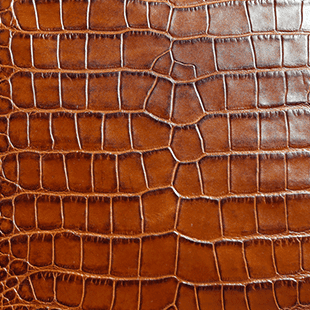
Genuine crocodile leather has irregular, natural scale patterns with pore openings on each scale. The tiles are not perfectly symmetrical. Embossed calfskin shows uniform, pressed patterns often repeating identically. A flame test on a small swatch—real crocodile smells like burnt hair, while embossed leather smells like chemicals.
What are the main grades of crocodile leather and how do they affect pricing?
Crocodile skins are graded based on scale symmetry, belly width, and flaw count. Grade 1 (flawless) skins have perfect scale alignment and no scars, commanding premium prices. Grade 2 has minor healed scratches or slight asymmetry, about 20-30% cheaper. Grade 3 has visible flaws, suitable for small panels. Grade 4 and tannery runs are heavily scarred and used for small accessories.
What tanning methods are best for handbag crocodile leather?
Chrome tanning yields soft, pliable leather ideal for structured bags with vibrant color. Vegetable tanning produces firmer leather that develops patina, preferred for classic styles. Combination tanning (chrome re-tanned with vegetable agents) balances softness and body. For handbags, full-chrome or combination-tanned skins in thicknesses 0.6-0.9 mm are standard.
How do I evaluate a crocodile leather supplier for consistent quality?
Assess suppliers on CITES compliance documentation, consistent grade scaling, color batch uniformity, and minimum order quantities. Request physical swatch books and reference samples from previous productions. Visit tanneries or use third-party inspection to verify tanning drums, finishing lines, and raw skin storage. Long-term reliable suppliers provide skin origin traceability and hide-level labels.
What are the typical lead times and cost drivers for crocodile leather orders?
Standard crocodile leather orders take 6-12 weeks from skin selection to finished crust or 10-16 weeks for custom-finished skins. Costs vary by species (Porosus most expensive, Alligator mid-range, Caiman cheapest), grade, size, and finish complexity. Exotic CITES permits add 1-2 weeks. Expect 30-50% deposit upfront with balance before shipment.
What are the key differences between Alligator and Crocodile leather for handbags?
Crocodile (especially Porosus) has smaller, more uniform square scales with a distinct ISO pore on each scale, offering a finer, luxurious appearance. Alligator has larger, rounder scales with a smoother belly area and softer hand feel. Crocodile is generally more durable and expensive. For structured luxury bags, Porosus is preferred; for softer, slouchy designs, Alligator is suitable.