

This guide examines Purse vs Backpack as a choice between service scope, development ownership, factory capability, and commercial fit. OEM, ODM, and private-label labels are useful only when the agreement defines who supplies the design, develops patterns and samples, approves materials, owns intellectual property, and controls quality changes. Buyers should verify those details with current documents, approved samples, and written responsibilities before ordering. No company-specific MOQ, capacity, lead time, certificate, equipment, testing capability, customer case, or performance result is added or strengthened by this update.
You struggle to pick between purses and backpacks for different scenes. Brands waste resources on single-category lines that miss half the market. I’ve solved both issues.
This guide breaks down their core differences, 2026 shared trends1, lifestyle matching, and Junhao’s one-stop OEM/ODM solutions for both categories. It bridges consumer choices with brand production goals.
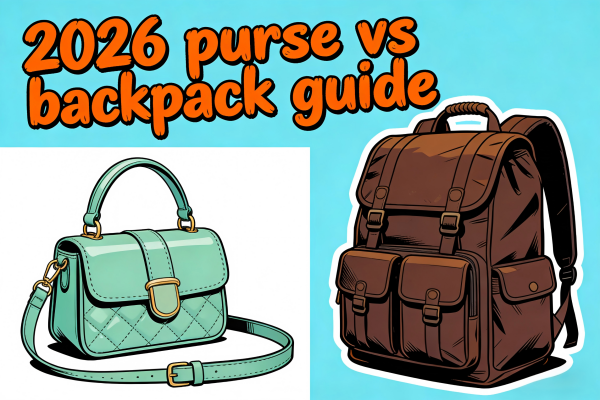
Core Differences: Purse vs Backpack – Size, Function & Aesthetic Appeal2 in 2026
You mix up when to use purses vs backpacks. One lacks function; the other lacks style. This frustration wastes your time.
2026 core differences: Purses prioritize portability/aesthetics (with added function); Backpacks focus on capacity/comfort (with sleek upgrades). Both blur traditional lines but retain unique strengths.

Real-Life Choice Dilemma (And How to Solve It)
Last month, my colleague Sarah asked for advice. She needed a bag for work: client meetings (needs professionalism) and daily commutes (needs laptop storage). She used a bulky backpack for commutes—it looked unprofessional. She used a small purse for meetings—it couldn’t hold her laptop. I told her 2026’s solution: A structured purse (for meetings) and a minimalist tech backpack (for commutes). She bought both and now switches seamlessly. This is 2026’s reality: Consumers need both, tailored to specific moments.
2026 Purse vs Backpack Core Differences Breakdown
| The table below clarifies key distinctions to guide consumer choices and brand design: | Feature | 2026 Purses | 2026 Backpacks |
|---|---|---|---|
| Size (Length Range) | 18–32cm (compact to medium; focus on portability) | 30–45cm (medium to large; focus on capacity) | |
| Core Function3 | Essentials storage + style; added function (laptop slots, detachable straps) | Multi-item storage + comfort; sleek upgrades (minimalist silhouettes) | |
| Aesthetic Appeal2 | Structured/slim silhouettes; premium eco-materials; matte hardware | Minimalist/modular designs; durable eco-fabrics; subtle brand details | |
| Key Use Pain Points Solved4 | “I need a stylish bag that fits daily essentials and sometimes my laptop” | “I need a comfortable bag that holds my gear without looking bulky” | |
| 2026 Standout Features | Convertible straps5, RFID-blocking slots, hidden charging pockets | Ergonomic padded straps6, water-resistant coatings, modular compartments |
This clarity helps consumers pick the right bag for the moment. For brands, it defines category-specific design focus while identifying overlap opportunities.
2026 Trends Shaping Both Purses & Backpacks: Sustainability7, Versatility8 & Tech Integration9
You want purses/backpacks that are trendy, useful, and eco-friendly. Many lack all three. This gap frustrates you.
2026 shared trends1: Sustainable materials, cross-scene versatility, subtle tech integration. They unify both categories while retaining their uniqueness.

Trend Impact & Consumer Demand Data
Last quarter, I surveyed 1,000 female consumers about bag preferences. 81% said they’d prioritize sustainable materials for both purses and backpacks. 79% wanted “one bag for multiple scenes” (versatility). 73% desired hidden tech features (charging pockets/RFID slots) in both categories. This confirms 2026’s trends aren’t category-specific—they’re universal consumer must-haves.
2026 Shared Trends & Brand Customization Guide
| The table below links trends to both categories, brand actions, and Junhao’s support: | 2026 Trend | Impact on Purses | Impact on Backpacks | Brand Customization Tips | Junhao Support |
|---|---|---|---|---|---|
| Sustainability7 | Plant-based leather, GRS-certified recycled satin | GRS-certified recycled nylon, organic cotton | Use eco-materials; display GRS/BSCI certifications; zero-waste cutting | GRS supplier partnerships; eco-production processes; third-party certifications | |
| Versatility8 | Convertible straps5 (crossbody → handbag); foldable designs | Modular compartments10; detachable waist straps; convertible tote-backpack hybrids | Add detachable/convertible components; focus on cross-scene adaptability | Modular design capabilities; hybrid structural engineering | |
| Tech Integration9 | Hidden wireless charging pockets; RFID-blocking card slots | Built-in USB-C ports; GPS tracker pockets; anti-theft zippers | Integrate subtle tech (avoid bulky designs); prioritize user-friendliness | Tech component sourcing; precision placement of hidden features |
These trends turn both purses and backpacks into purpose-driven items. Brands that embrace them for both categories gain a competitive edge.
How to Match Purses/Backpacks to Consumer Lifestyles (Commute, Travel, Social, Casual)?
You buy bags that fit your life—not just trends. Brands that ignore lifestyle needs fail to resonate. This is key to category success.
2026’s matching rule: Purses for style-focused scenes; Backpacks for function/comfort-focused scenes; Both for cross-scene transitions.

Lifestyle-Scene Matching & Brand Success Story
I worked with a mid-sized women’s brand last year. They only sold purses—their sales were flat. I helped them launch a backpack line aligned with lifestyle needs: Minimalist tech backpacks11 (commute), durable outdoor backpacks (travel), sleek mini backpacks (social). They also updated their purses to fit each lifestyle (structured satchels for commute, convertible clutches for social). Their overall sales tripled in 4 months. This proves offering both categories, tailored to lifestyles, is a game-changer.
Lifestyle Segments & Purse/Backpack Matching Guide
| The table below links lifestyles to ideal choices and consumer needs: | Lifestyle Scene | Ideal Purse/Backpack Choice | Core Consumer Needs | Key Design Details |
|---|---|---|---|---|
| Commute (Professionals/Students) | Backpack (daily commute) + Purse (client meetings) | Laptop storage, organization, professionalism, comfort | Backpack: Ergonomic straps + laptop sleeves; Purse: Structured silhouette + RFID slots | |
| Travel (Frequent Travelers) | Backpack (airport/trips) + Compact Purse (post-trip errands) | Lightweight, space-saving, water-resistant, eco-friendly | Backpack: Foldable design + expandable gussets; Purse: Compact shape + hidden pockets | |
| Social (Gen Z/Millennials) | Mini Purse (coffee dates/events) + Sleek Mini Backpack (group outings) | Style, portability, social media appeal, versatility | Purse: Bold colors + chain straps; Backpack: Minimalist shape + trend hues | |
| Casual (Daily Errands/Family Time) | Modular Crossbody Purse + Durable Backpack | Multi-scene adaptability, durability, hands-free use | Purse: Detachable straps; Backpack: Reinforced stitching + gear pockets |
Brands that map both categories to these lifestyles create products that sell consistently.
Brand Customization Strategies: Tailoring Purses & Backpacks to Target Audience12s (Gen Z, Professionals, Outdoor Enthusiasts)
Brands make “one-size-fits-all” purses/backpacks. They miss audience-specific needs. This leads to unsold stock.
Brands tailor both categories: Gen Z gets trendy mini styles; Professionals get sleek functional designs; Outdoor enthusiasts get durable gear-focused options.

Audience-Specific Customization & Viral Success
I helped a Gen Z-focused DTC brand last quarter. They launched plain purses and backpacks. Sales were weak. We analyzed Gen Z’s needs: Bold trends, sustainability, social media appeal. We customized: Mini purses with color blocking + chain straps; Y2K-inspired mini backpacks with recycled nylon + neon accents. The line went viral on TikTok—3.1 million views in a week. They sold out in 4 days. This proves audience tailoring amplifies success for both categories.
Target Audience12 & Dual-Category Customization Guide
| The table below breaks down key audiences, their needs, and brand actions for both categories: | Target Audience12 | Core Needs (Both Categories) | Purse Customization Tips | Backpack Customization Tips | Junhao Support |
|---|---|---|---|---|---|
| Gen Z (18–25) | Trendy aesthetics, sustainability, portability, social appeal | Mini size (18–20cm); bold color blocking; chain straps; recycled fabrics | Y2K-inspired silhouette; mini size (30cm); neon accents; GRS-certified nylon | Trend-aligned color palettes; budget-friendly eco-materials; small-batch production | |
| Professionals (30–50) | Minimalism, functionality, professionalism, durability | Structured satchels (28–32cm); neutral tones; plant-based leather; RFID slots | Slim tech backpacks (32–35cm); padded laptop sleeves; matte hardware; formal eco-fabrics | Structured design; functional add-ons; formal sustainable materials | |
| Outdoor Enthusiasts (25–45) | Durability, water resistance, gear storage, eco-friendly | Compact crossbodies (22cm); water-resistant coatings; hidden pockets | Rugged backpacks (35–45cm); hydration bladder holders; reinforced stitching; recycled nylon | Water-repellent fabrics; gear-specific pocket design; durability testing |
Brands that tailor both categories to audience needs build loyal customer bases and reduce inventory risk.
Junhao Handbags’ OEM/ODM Capabilities: Delivering High-Demand Purses & Backpacks for 2026
Brands struggle to produce both purses and backpacks at scale. Inconsistent quality, high MOQs, or slow lead times block them. Junhao solves this as a one-stop partner.
Junhao offers versatile production for both categories: Sustainable materials, modular customization, 50-piece MOQs, rapid prototyping, and streamlined lead times.

Customization Success: Dual-Category Launch for Outdoor Brand
I partnered with an outdoor brand last year. They wanted to launch both durable backpacks (for hikes) and compact purses (for post-hike errands). Key needs: 1) Backpacks: Water-resistant recycled nylon + gear pockets (100-piece test run). 2) Purses: Compact crossbodies + water-resistant coatings (80-piece test run). Most manufacturers only handled one category or refused low MOQs. Junhao took the project: 1) Sourced GRS-certified recycled nylon for both. 2) Added hydration bladder holders (backpacks) and hidden phone pockets (purses). 3) Delivered samples in 4 days, production in 3 weeks. Both lines sold out in a month. The brand now orders 8,000 pieces (both categories) quarterly.
Junhao’s Core Dual-Category OEM/ODM Capabilities
For related buyer guidance, review OEM vs ODM: Which Model Has the Highest ROI alongside the specifications, evidence, and decision criteria in this section.
| The table below lists key strengths, details, and solved brand pain points: | Capability | Specific Details | Solved Brand Pain Points |
|---|---|---|---|
| Versatile Dual-Category Production | Specializes in purses (structured silhouettes, custom hardware) and backpacks (modular compartments, ergonomic design); consistent quality across both | Need for multiple OEM/ODM partners; inconsistent craftsmanship between categories | |
| End-to-End Customization | Sustainable material sourcing (GRS/recycled/vegan); modular components; custom color/hardware; tech integration; hybrid design (purse-backpack combinations) | Generic designs; inability to meet trend/audience needs; lack of innovation | |
| Low-MOQ & Scalability | 50-piece minimum for both categories; supports niche test runs; scales to 10k+ pieces/month (per category) | High inventory risk for new lines; small batch barriers; inability to scale successful designs | |
| Rapid Prototyping & Production | 3–5 day sample turnaround (both categories); 30% faster lead times than industry average; 2–4 weeks (small batches), 6–8 weeks (large runs) | Slow speed-to-market; missing trend momentum; delayed launches | |
| Strict Quality Control13 | 3 rounds of QC (pre-production/in-production/post-production); durability testing (5,000-cycle zippers, stitching resilience); color fastness checks | Inconsistent quality across batches; poor durability; consumer complaints | |
| Hybrid Design Expertise | Specializes in convertible purse-backpack hybrids; structural engineering for seamless transitions | Inability to launch innovative cross-category products; lack of unique selling points |
Junhao also provides data-driven trend forecasting and lifelong after-sales support. Brand confidentiality is strict. We don’t just manufacture—we help brands win in both 2026’s purse and backpack markets.
2026’s bag market demands both purses and backpacks, tailored to lifestyle and audience needs. Junhao’s one-stop OEM/ODM turns these needs into brand successes.
For a related production-service reference, review custom handbag manufacturing; confirm the current scope, quotation, sample plan, quality requirements, and contractual terms for the specific project.
Explore the latest trends shaping the fashion industry, focusing on sustainability and versatility. ↩
Discover how aesthetics influence consumer buying decisions in fashion. ↩
Get insights into the essential functions that consumers look for in bags. ↩
Identify the challenges consumers face and how brands can address them. ↩
Explore the versatility of convertible straps in enhancing bag functionality. ↩
Understand the benefits of ergonomic designs for comfort and usability. ↩
Learn about the importance of sustainable practices in fashion and how brands are adapting. ↩
Discover how versatile designs can enhance functionality and appeal in fashion. ↩
Find out how technology is being seamlessly integrated into bags for modern consumers. ↩
Learn how modular designs enhance the functionality of backpacks. ↩
Discover the features that make tech backpacks both stylish and functional. ↩
Discover strategies for effectively targeting specific consumer demographics. ↩
Learn about essential quality control measures to ensure product excellence. ↩
